Supply Chain Vulnerabilities
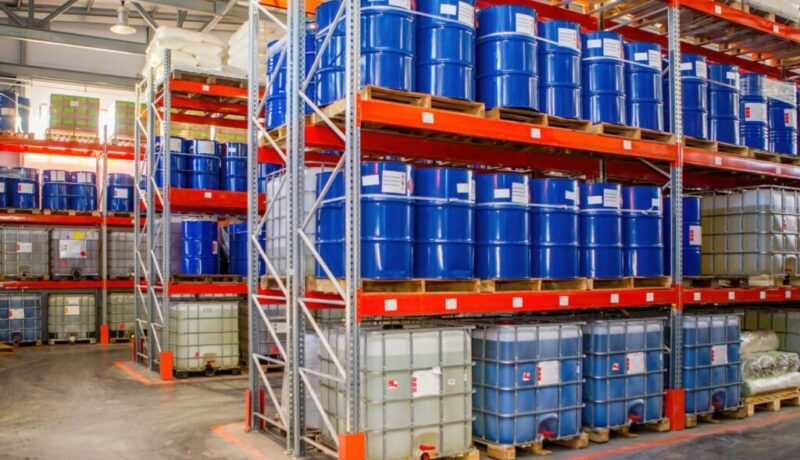
Specialty chemicals often comprise complex mixtures of multiple chemical components, each potentially classified as specialty chemicals themselves. A brake fluid example illustrates this complexity, containing benzotriazole, formaldehyde, diethanolamine, and C10-14-tert-alkyl amines. Disruptions in any raw material supply—or price increases in feedstock chemicals like methanol—expose manufacturers to production delays and reduced margins while competing with other industries for the same resources.
How to Overcome Them
An optimized, resilient supply chain requires proactive sourcing strategies. Rather than concentrating suppliers in a single offshore location, engaging nearby suppliers with strong surge capacity provides insulation from disruptions. Investing R&D into alternative, easier-to-source ingredients can also strengthen resilience.
Just-in-time inventory, while beneficial in stable periods, leaves operations vulnerable. Increasing raw materials storage capacity and maintaining “buffer” stocks during uncertain market conditions represents valuable insurance. Predictive analytics software enables forecasting of market trends and strategic purchasing planning.
Crowded Markets
Established competitors dominate many specialty chemical categories, particularly those projected for strong growth. The brake fluid market exemplifies this saturation, with competitors focused on three main DOT types. As market growth attracts new entrants, differentiation becomes increasingly difficult.
How to Overcome Them
Business model selection drives differentiation strategy. Companies pursuing direct competition with established players can emphasize superior customer service to distinguish themselves from large corporations with impersonal support. Those targeting niche markets require thorough market research to determine pricing tolerance relative to performance improvements.
Truly innovative specialty chemicals can create entirely new markets where their developers operate without direct competitors, though this remains exceptionally challenging.
Commoditization of Specialty Chemicals
According to a 2010 PwC report titled “Future of Chemicals III: The Commoditization of Specialty Chemicals,” first-mover advantages prove short-lived. New competitors enter markets at undercutting prices, transforming specialty products into commodity chemicals. Companies often respond by cutting R&D investments to reduce costs, initiating “a vicious cycle of spiraling away from innovation toward commoditization.”
The report warns that “too much money and effort targeted at selling commodities” damages profit margins while neglecting new product development, leaving portfolios deficient in high-margin specialty items.
How to Overcome It
Customization offers market differentiation through products designed for specific targets, such as paint formulated for individual automakers. However, this represents primarily a temporary advantage, as new entrants eventually replicate this strategy.
Continuous investment in developing products with strong potential proves essential. This doesn’t require entirely new formulations; reformulating existing products with greener ingredients represents a proven, underutilized strategy. Cost-effective digital tools like AI software enable R&D activities without substantial outlays risking dead-end projects.
Maintaining operational flexibility and adjusting business models—even at individual SKU levels—when commoditization occurs remains critical. This includes minimizing costs and adapting marketing to regional and application-specific customer needs, particularly their demand for standardization and simplicity.
Regulatory and Sustainability Pressures
Demand for environmentally gentler products comes from customers, investors, and governments. The regulatory burden presents the most challenging pressure on chemical manufacturers. The American Chemistry Council estimates chemical and plastics industry regulation costs at “nearly $7 billion annually.”
SOCMA (Society of Chemical Manufacturers & Affiliates) identified five pressing regulatory issues, including EPA review slowdowns making product commercialization difficult, concerns about subjective Risk Management Program standards, and potential unintended consequences from the Hazard Communication Standard.
SOCMA maintains that heavy regulations create entry barriers, stifling innovation—“the lifeblood of the specialty chemicals industry”—as regulatory compliance costs disadvantage startups today compared to forty years ago.
How to Overcome Them
Compliance software and staying current through trade publications and industry group memberships provide essential guidance. SOCMA reported saving member companies 1,000 hours and $45,000 each on regulatory analysis and compliance in 2023.
Unichem Helps You Navigate Your Toughest Specialty Chemical Challenges
With robust supply networks, multi-market experience, and capabilities for developing complex products, Unichem supports companies overcoming specialty chemical development challenges.