Transporting hazardous chemicals is a serious responsibility. If you plan to ship hazardous materials (HAZMATs), it’s your job to ensure you’re following the law when you move dangerous chemicals anywhere for any reason.
What Is a Hazardous Chemical?
The Department of Transportation defines a hazardous material as one that poses an “unreasonable threat to the public and the environment.” A chemical in its pure form may qualify as hazardous, but non-hazardous if present in a solution below its Reportable Quantity (RQ).
Different Types of Hazardous Chemicals
The DoT’s Federal Motor Carrier Safety Administration outlines nine hazard classes: Explosives, Gases, Flammable/Combustible Liquids, Flammable Solids, Oxidizers/Organic Peroxides, Poisons, Radioactive materials, Corrosives, and Miscellaneous.
How to Transport Hazardous Chemicals and Stay Compliant
For domestic shipping, the DoT’s 49 CFR (Title 49) is the key document outlining prescribed methods for preparing, shipping, and handling dangerous goods. As the shipper, your most important job is properly classifying the HAZMATs, including the proper shipping name, hazard class, identification number, hazard warning label, packaging, marking, and employee training.
Hazardous Chemicals Communications
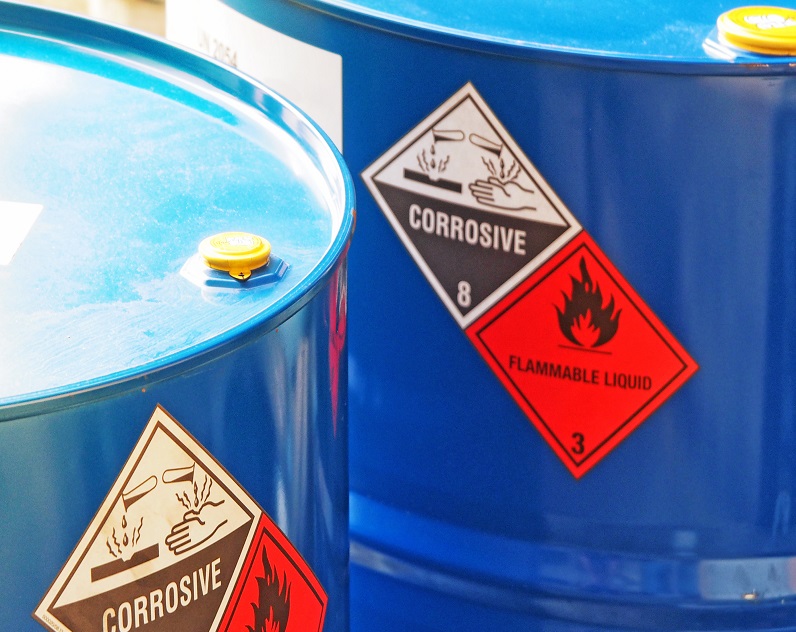
You must clearly communicate potential dangers via four means: shipping papers (proper shipping name, hazard class, ID number, packaging group, emergency phone number), markings (durable, in English, unobscured), labels (reserved for HAZMATs), and placarding (symbols affixed to the transporting vehicle).
Employee Training
Anyone involved with hazardous materials must be trained within three months of starting the job and renewed every three years, covering general awareness, function-specific, safety, security awareness, and in-depth security training.
Packaging
HAZMAT packaging follows Performance Oriented Packaging (POP) standards. You must determine the Packing Group classification: I (Great Danger), II (Medium Danger), or III (Minor Danger).
Finding and Vetting HAZMAT Carriers
The carrier should have appropriate property licenses, safety protocols, and insurance, plus a Hazardous Material Safety Permit (HMSP) from the FMCSA, verifiable through the agency’s CSA lookup tool.
Another Option: Outsourcing Manufacturing and Shipping
A contract manufacturer like Unichem provides a turnkey solution, handling everything from blending to packaging and shipping—offering a shortcut to the expertise and employee training needed to ship HAZMATs safely and within the confines of the law. Talk to our team.