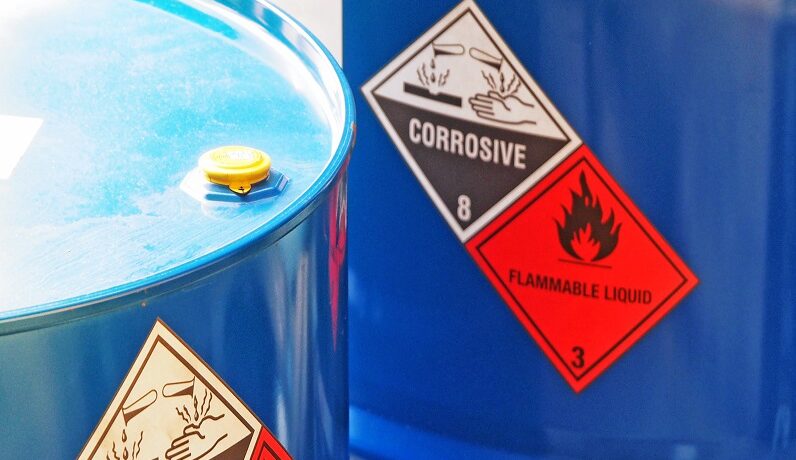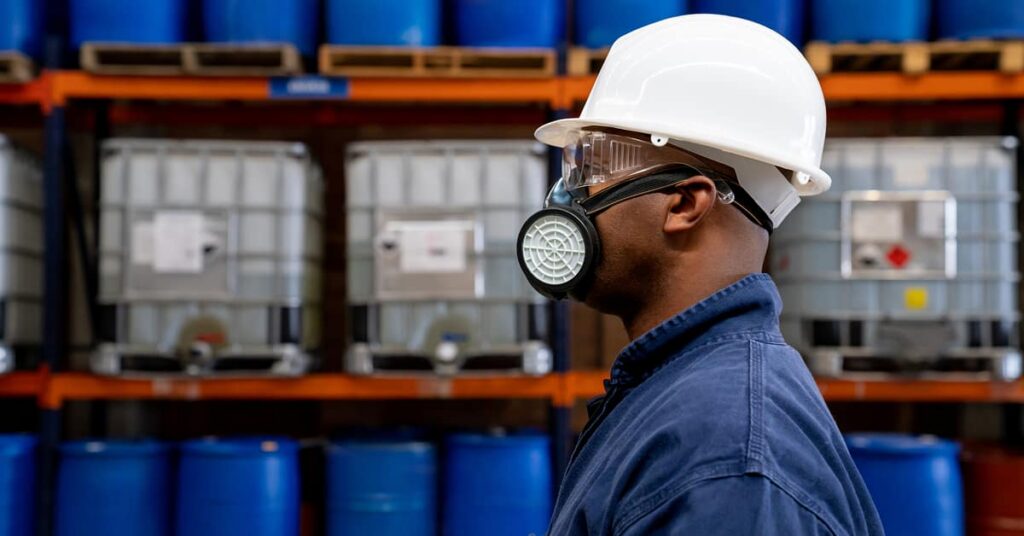
By taking proper safety measures, flammable and combustible materials are safe to handle during manufacturing, transferring, and shipping. The following guidelines can serve as a refresher for your chemical manufacturing business.
What Are Flammable & Combustible Chemicals?
Flammable chemicals ignite easily at ambient temperatures when exposed to flame, spark, or heat source, while combustible chemicals can ignite with some effort. Flammable vapors with a vapor density greater than 1.0 are heavier than air and may accumulate in low-lying areas, increasing fire or explosion risk. OSHA has also ramped up its emphasis on combustible dust, which led to 119 deaths across 281 incidents from 1980 to 2005.
Examples of Flammable Chemicals
Some of the most widely used flammable chemicals in manufacturing include ethanol, methanol, benzene, acetone, and xylene.
Assess and Control the Risks
Response plans need to account for the potential for escalation. Understanding a chemical’s flash point, suitable extinguishing media, and required PPE—all found in the SDS—is the starting point.
Offering Adequate Training and Supplying Vital Information
SDS sheets should be discussed in detail at safety meetings so employees know proper storage and dispensing methods, required PPE, and emergency protocols for spills, fires, and exposures.
Staying Compliant
OSHA’s 1910 Subpart H — Hazardous Materials is the key section governing flammable and combustible materials, covering tank selection, storage, location, quantities, and emergency systems. The NFPA, ASTM, Underwriters’ Laboratories, and API are frequently referenced partner organizations for fire safety standards.
Handling Flammable Chemicals
PPE—anti-static shoes, grounding and bonding equipment, flame retardant overalls, gloves, goggles, and breathing apparatus—is a must, along with proper ventilation and keeping flammables away from ignition sources like metal cutting, grinding, or open flames.
Storing Flammables Correctly
Stainless steel flammable storage cabinets that meet OSHA and NFPA regulations, and safety cans with spring-loaded lids and flame arresters, are best practice, kept away from exits and ignition sources.
Build a Safety Culture
When safe behavior is a mutual expectation across the whole organization, leadership sets the tone that just meeting legal requirements isn’t enough. Unichem maintains designated flammable blending and reactor operating areas overseen by a Certified Industrial Hygienist and an in-house EHS Department. Talk to our team about your flammable chemical needs.