Despite buzzy headlines about autonomous driving and onboard biometrics, safety remains one of car buyers’ top priorities year after year. In many cases, specialty chemicals are the key to new safety features’ performance.
Gentler, Faster-Acting Airbags
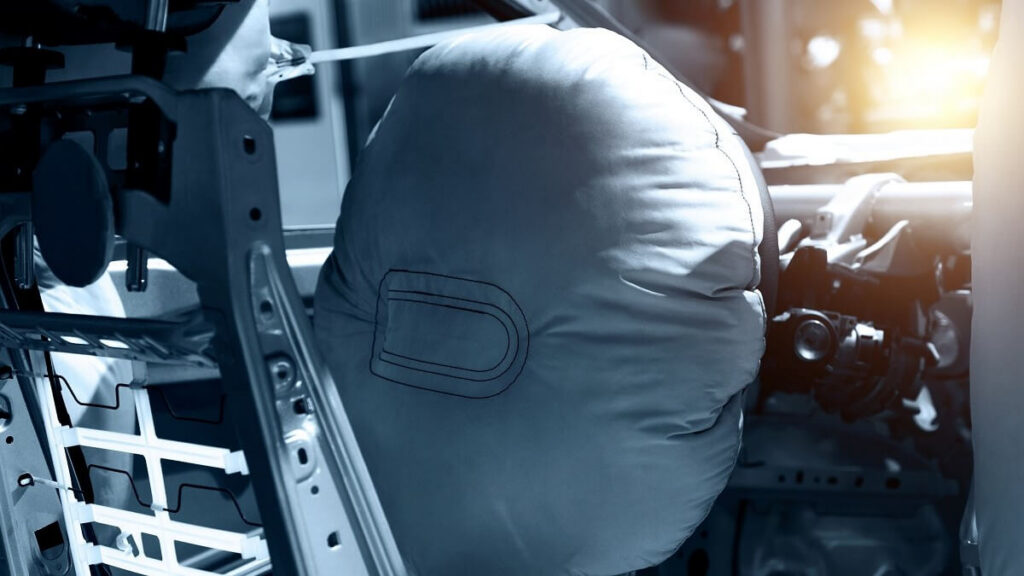
Airbags reduce the risk of death in a collision by up to 52% when installed on the side and rear of cars. They’re commonly made of silicone-coated polyamide fabric, and inflate via a chemical reaction where guanidinium nitrate is ignited, flooding the bag with nitrogen gas while a copper nitrate oxidizer keeps the gas from being too hot — replacing the toxic sodium azide and risky ammonium nitrate used previously.
Harder-Working Brake Fluid
Brake fluids are typically glycol- or silicone-based. DOT 3 fluids are made from diethylene glycol, DOT 4 from glycol ether and borate ester, and DOT 5 (favored by classic car owners) often includes tributyl phosphate. Corrosion inhibitors, antioxidants, and pH stabilizers give brake fluid a high boiling point and low freezing point.
Better Seat Belts
Seat belts saved more than 320,000 lives between 1960 and 2012. Today’s versions are commonly polyester (PET) for tensile strength and abrasion resistance, while Kevlar offers premium strength while remaining light and flexible.
Improved Radar Sensors
Advanced driver assistance systems (ADAS) depend heavily on radar sensors, cameras, and specialty chemicals. Radar sensor covers are now made from polybutylene terephthalate (PBT) for its low dielectric constant, while polydimethylsiloxane bonds image sensor dies to substrates.
Longer-Lasting Engine Coolants
Ethylene glycol or propylene glycol mixed with water raises the boiling point and lowers the freezing point of coolant. Newer organic acid technology (OAT) coolants use ingredients like 2-ethylhexanoic acid to prevent corrosion, delivering service lives as long as the engine itself.
Whether you require automotive components that are more durable, lightweight, resilient, or environmentally friendly, Unichem’s expertise in developing specialized chemicals makes us a crucial ally for automotive businesses.