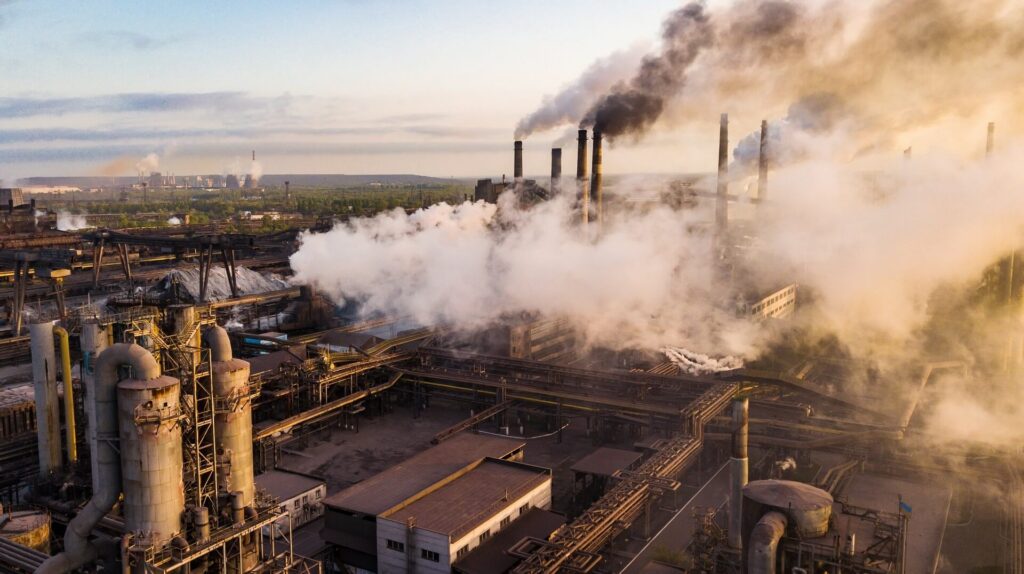
As the world races to curb greenhouse gas emissions, Carbon Capture and Storage (CCS) has emerged as one of the most promising industrial decarbonization strategies. According to the International Energy Agency, approximately 45 commercial carbon capture facilities are currently operating worldwide, collectively capturing over 50 million metric tons of CO₂ per year.
Implementing CCS requires a mix of engineering, infrastructure, storage technology — and crucially, chemistry. As a specialty chemical manufacturer with proven expertise in complex formulations, scale-up, and regulatory compliance, Unichem helps developers bring these advanced chemistries from the lab bench to industrial deployment.
Where Specialty Chemicals Fit in CCS Systems
Chemical absorption: In post-combustion systems, solvents like monoethanolamine (MEA) and advanced blends capture CO₂ from flue gas, often requiring additives to enhance selectivity and reduce corrosion.
Physical adsorption: Technologies using zeolites, metal-organic frameworks (MOFs), and other sorbents rely on the surface properties of specialty materials to selectively trap CO₂ molecules.
Catalytic & stabilizing agents: In regeneration and conversion phases, chemicals act as catalysts, corrosion inhibitors, and stabilizers to optimize performance under high heat or pressure.
Chemical Needs Across Capture Types
Post-combustion capture relies heavily on solvent chemistry that must optimize CO₂ binding while minimizing degradation over multiple cycles. Pre-combustion capture, found in hydrogen and syngas production, uses physical solvents like Selexol or Rectisol that must remain stable across wide temperature swings. Oxygen-fuel combustion shifts the chemical challenge to corrosion inhibition and material resilience in high-temperature, acidic environments.
Beyond these, emerging pathways like Direct Air Capture, membrane-based separation, and chemical looping each depend on advanced specialty chemistries to improve selectivity, durability, and cost-effectiveness.
A Growth Opportunity for Chemical Developers
Carbon capture is no longer limited to power generation — it’s expanding across cement and steel production, hydrogen manufacturing, and waste-to-energy facilities, each presenting unique chemical challenges that require customized solutions.
Challenges in Commercializing CCS-Ready Chemicals
Lab-validated results don’t always hold up under real-world operating conditions; new solvents or additives may react with plant materials; and many promising formulations still require significant energy for regeneration. These risks underscore the importance of scale-up testing and process optimization.
Unichem as a Scale-Up and Manufacturing Partner for CCS Chemistry
Our facilities handle high-shear mixing, flammable and corrosive materials, and reaction chemistries such as saponification, ammoniation, and acylation, with advanced in-house testing including FTIR, HPLC, GC, and ICP analytics. Explore how Unichem can help you scale your next-generation CCS chemical solutions.